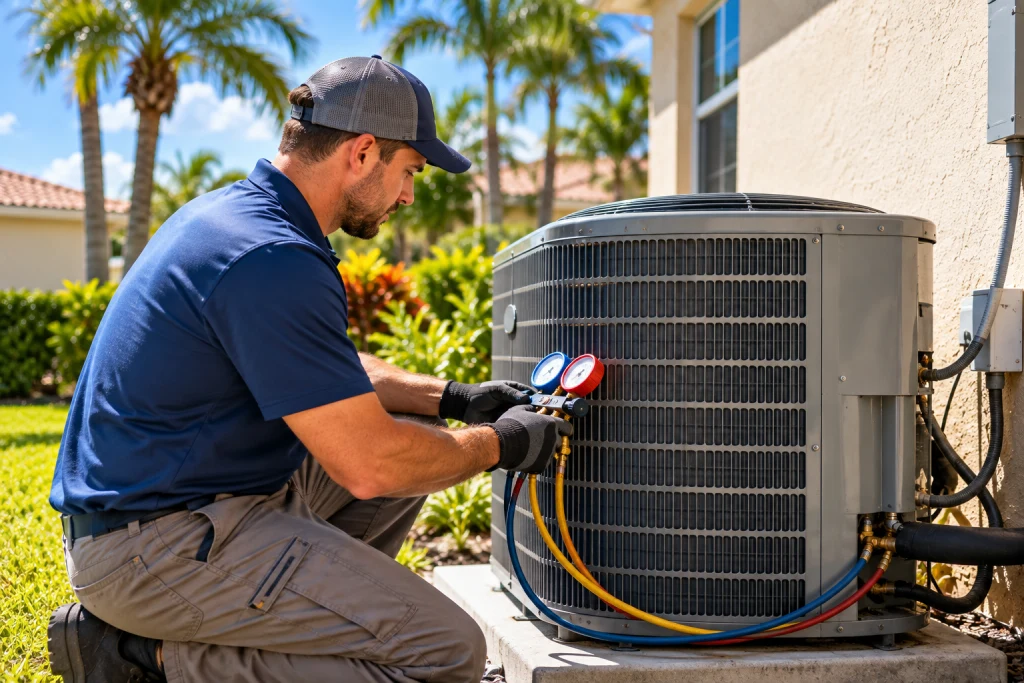
A snowbird AC checklist for your Florida home is what stands between a cool, dry house on arrival day and a musty, humid one that fights you for the first week you’re back. If you close the house up in spring and don’t return until winter, the system you left on an away setting has been running the show alone for four to six months, through the hottest stretch of the year and all of hurricane season.
The short version: don’t shut the system off, hold it on a proper away setpoint the whole time, check the filter and condensate line before you ask it to work hard again, and use remote monitoring so a small problem doesn’t turn into a wet-drywall problem before you land in 2026.
By the ACPrices.com Editorial Team•✔ Checked against current DOE, ENERGY STAR, and EPA guidance•Last Updated: September 2026
This guide is built for snowbird homeowners heading back to Naples, Sarasota, St. Petersburg, Fort Lauderdale, and the rest of coastal and Gulf Florida, where the seasonal population swing is heaviest and where salt air and summer humidity are hardest on a system nobody was watching. In our experience working with Florida homeowners and the contractors in our network, a handful of recurring issues show up again and again on snowbird return calls, and nearly all of them are preventable with a checklist you run before you ever board a flight.
Below is the exact timeline to follow before and after you land, what to check when you’re back in the house, how much of that you can handle remotely, the mold and mildew warning signs an idle system leaves behind, and when it actually makes sense to call a local contractor for a pre-arrival tune-up.
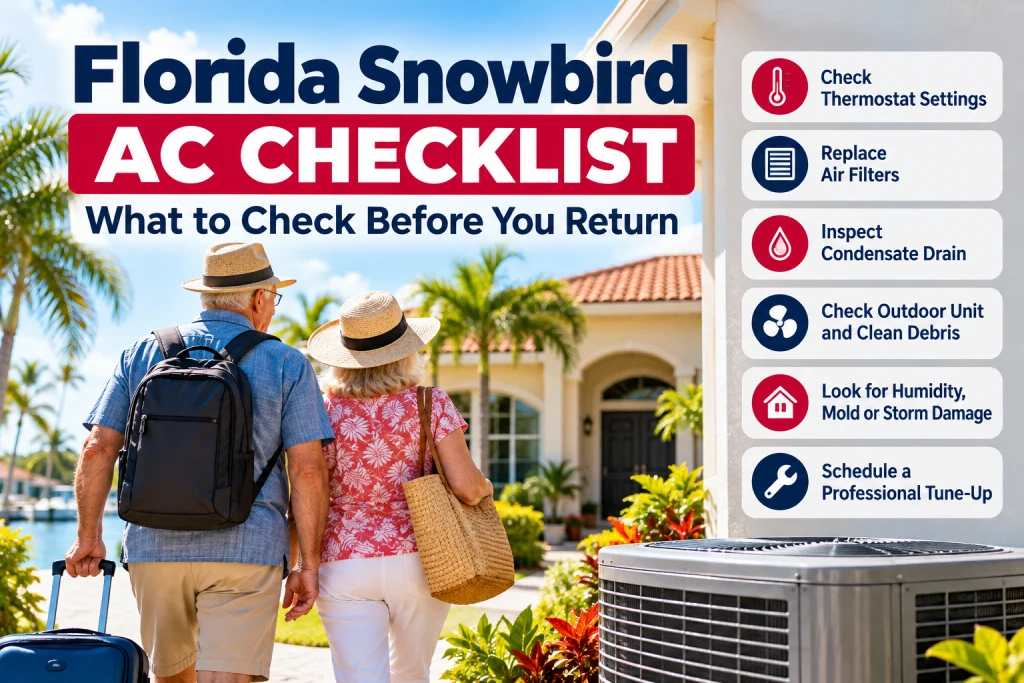
If you only have a few minutes before your flight boards, this is the checklist that actually matters for a system that has been idle since spring.
📋 Pre-Arrival AC Checklist
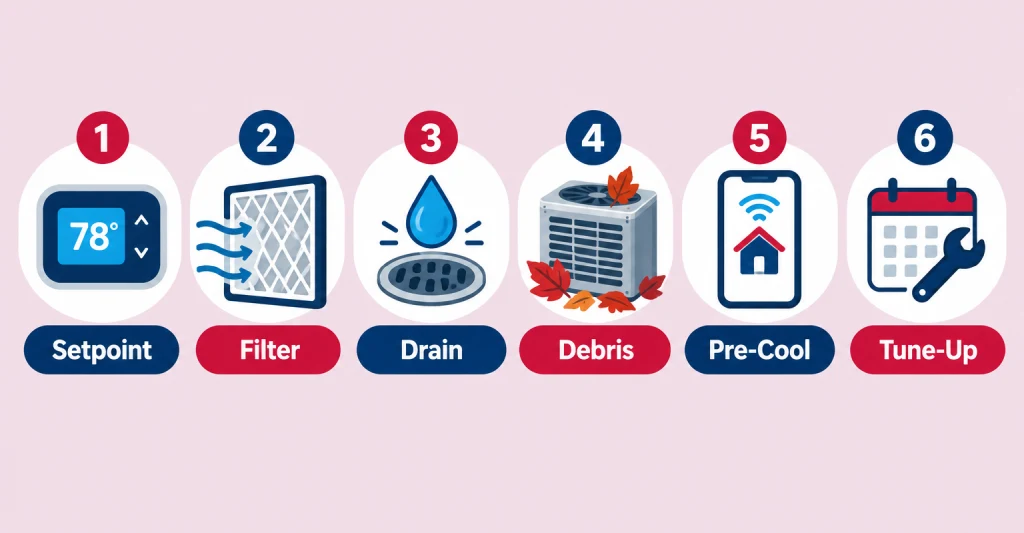
Confirm the thermostat held an away setpoint of 78°F to 82°F the entire time, not “off”
Replace the air filter, or arrange for a contractor to do it before you land
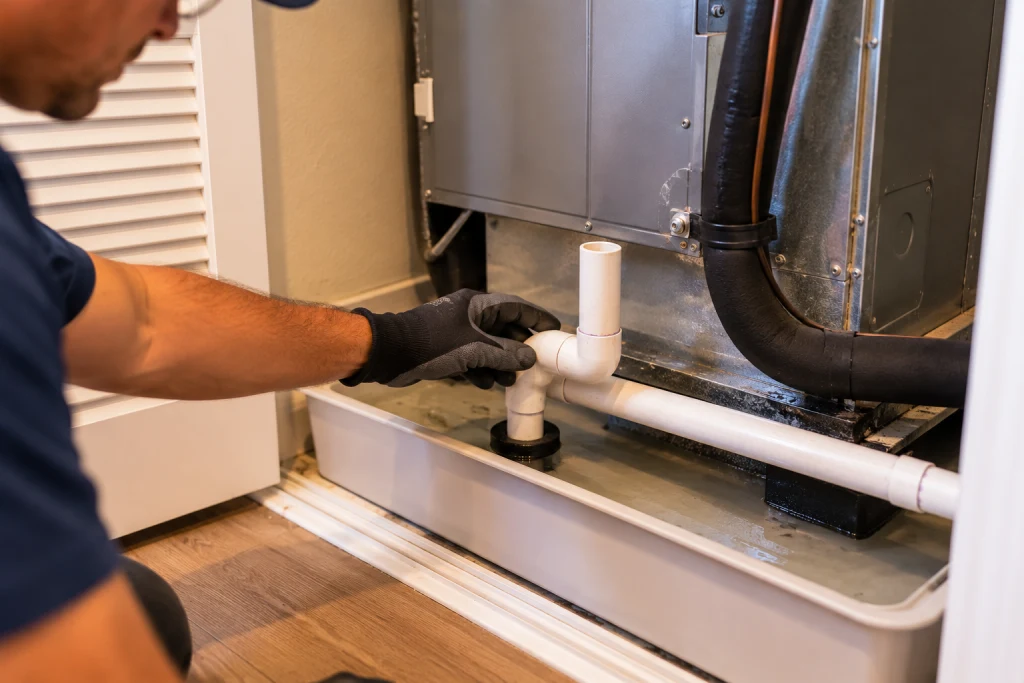
Check the condensate drain line and pan for standing water, algae, or a musty smell
Walk the outdoor condenser for storm debris, vegetation, or salt residue on the coil
Set a smart thermostat to start cooling the house 24 to 48 hours before arrival
Book a licensed local contractor for a pre-arrival tune-up if the system sat idle through hurricane season
This list assumes a system left running on a normal away schedule rather than shut down completely. If yours was fully powered off, treat every item below as mandatory, not optional.
🏝️ Returning Soon?
Get Your Pre-Arrival Tune-Up Lined Up Before You Land
Tell us your return date and Florida city, and we’ll connect you with a licensed local contractor who can check the system before or right after you touch down.
Free · No obligation · Built for Florida snowbirds
Your Florida Snowbird AC Checklist by Timeline
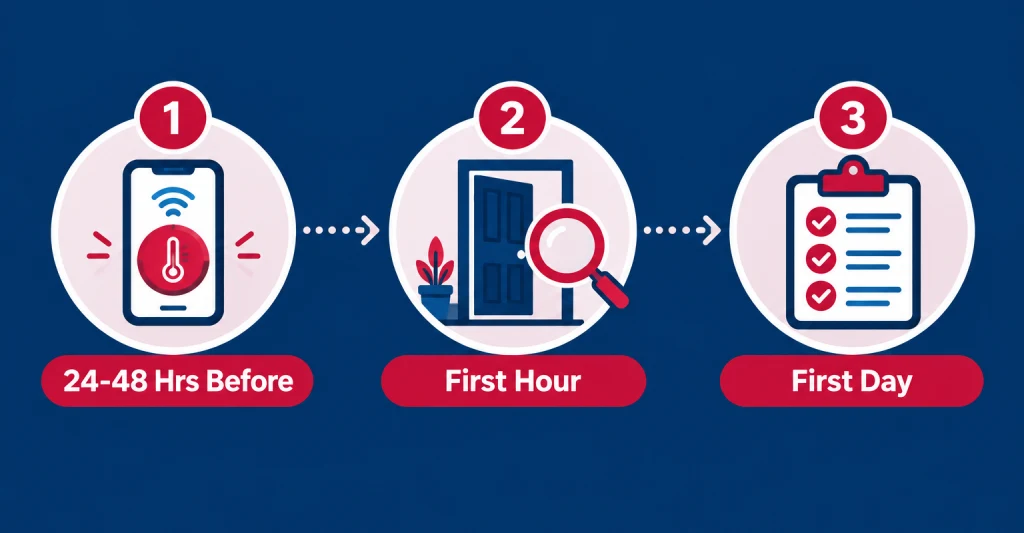
The quick answer above covers the essentials. Here’s that same checklist broken into exactly when to do each step, from the last 48 hours before your flight through your first full day back in the house.
24 to 48 Hours Before Arrival
Check the thermostat’s current setpoint and humidity reading remotely, if it’s a smart model
Review any system alerts or short-cycling notifications the thermostat logged while you were gone
Drop the setpoint toward your normal comfort range so the house is pre-cooling before you land
Confirm the visit is still on if you booked a pre-arrival tune-up
First Hour Home
Notice any musty odor before you even look at the equipment. That’s your earliest warning sign.
Check the air handler closet and condensate pan for standing water or visible staining
Walk the outdoor condenser for debris, vegetation, or obvious storm damage
Check the circuit breaker and outdoor disconnect if the system doesn’t respond to the thermostat
First Day Back
Replace the air filter if it wasn’t already handled remotely through a contractor visit
Confirm the system is actually cooling and pulling humidity down, not just running
Check that airflow at each vent feels consistent from room to room
Schedule a professional inspection if anything above looked, sounded, or smelled off
Why Does an AC System Need Special Attention After Months Vacant?
An AC system left idle for four to six months in Florida deals with sustained attic heat, unmanaged humidity, and zero human eyes on it during the exact stretch of the year, June through November, when hurricanes and heavy rain are most likely. That combination wears on the equipment differently than a system used every day.
Closed-up Florida attics routinely climb well above 120°F in summer with no attic fan or occupant to notice. A capacitor or contactor that would normally get a break overnight during in-season use instead sits in sustained heat for weeks at a stretch. That’s one reason snowbird systems often reveal a weak capacitor or a pitted contactor the first time they’re asked to work hard again in November.
The condensate line is the quieter failure point. Without regular runoff, algae and biofilm build up inside the drain line. A line that was barely draining in April can be fully clogged by November. That’s exactly how a closed house ends up with water damage nobody was there to catch.
There’s also a detail most maintenance checklists miss on the coast. A condenser that runs daily gets a partial rinse from its own condensation runoff and regular rainfall contact, which slows salt buildup on the coil fins. A unit that spent months mostly idle on an away setting doesn’t get that same cycling, so in coastal snowbird markets like Naples and Fort Lauderdale, salt residue has more time to sit undisturbed on the coil before the system is asked to run at full capacity again. That’s worth catching in a pre-arrival check, since a corroded coil is far cheaper to clean than to replace.
Your system also spent the entire active hurricane season unattended, so a pre-arrival check is really two checks in one. It catches what four to six months of Florida climate did to the equipment, and it catches what a storm might have done while nobody was home. If a named storm tracked anywhere near your area this year, our hurricane season AC prep guide covers what storm-related damage actually looks like on the equipment side.
Add insects and small wildlife to the list. An outdoor disconnect box or control panel that isn’t opened for months is an appealing, undisturbed spot for wasps, ants, and lizards. A chewed low-voltage wire is a surprisingly common reason a system won’t respond to the thermostat at all on day one, and it’s rarely the first thing a homeowner suspects.
What Should You Check When You Return to Your Florida Home?
Before you raise the setpoint and walk away, work through the system in the order a technician would: filter, drain, outdoor unit, then electrical, and only after that adjust the thermostat.
Check Item
Why It Matters
Air filter
A filter left in place for 4 to 6 months is well past its service life and restricts airflow across the coil
Condensate drain line and pan
Algae buildup during idle months is a leading cause of a clogged line and standing water
Outdoor unit clearance
Vegetation, leaves, and storm debris that grew in over the summer restrict airflow across the condenser coil
Coil and cabinet for salt residue
Coastal units need a rinse before running hard, especially after months without regular rainfall contact
Circuit breaker and disconnect
Confirm nothing tripped and the outdoor disconnect wasn’t left pulled as a storm precaution
Thermostat batteries and schedule
Dead batteries or a schedule that reverted to factory defaults are common after a long vacancy
Attic and ceiling for water stains
New staining near the air handler is often the first visible sign of a slow leak that started while you were away
Musty odor before startup
A strong musty smell before you even turn the system on is a signal to inspect for mold, not to run the fan and hope
⚠️ Know Where Your Checklist Stops: The circuit breaker and outdoor disconnect are safe to check from the outside. Do not open the electrical panel, test a capacitor, or work inside the disconnect yourself. If you see damaged or chewed wiring, scorch marks, or the system won’t respond after the breaker and disconnect both check out, have a licensed HVAC professional inspect it before you touch anything further.
If you keep pets, plants, or hurricane shutters closed while you’re away, factor those into the walkthrough too. Shutters left down over windows near the air handler closet trap heat and moisture in that one room, which is often where the first signs of trouble show up.
⚠️ Don’t Just Crank It and Walk Away: If the house smells musty or the air handler closet feels damp, run the blower on fan-only first and inspect before pushing the system into full cooling. Forcing a contaminated system into heavy runtime can push spores through the ductwork into the rest of the house.
A quick way to keep the checklist safe: handle what’s visible and external yourself, and hand off anything electrical or inside the cabinet to a licensed technician.
Safe for a Homeowner to Check
Leave to a Licensed Professional
Air filter
Electrical testing inside the disconnect or panel
Visible debris around the outdoor unit
Capacitor or contactor testing and replacement
Thermostat settings and batteries
Refrigerant charge and system performance diagnostics
Visible water in the drain pan
Evaporator coil inspection and cleaning
Obvious storm damage from the outside
Any repair involving wiring or the electrical disconnect
Systems that struggled all last season before you even left tend to fail first after a long idle stretch, not last. If yours needed a repair call every few months even before you started leaving it idle, it’s worth reading our guide on repairing versus replacing an aging AC before sinking more money into a unit that was already on borrowed time.
🧭 System not responding at all? Walk through the most common no-power and no-cooling causes with the AC Troubleshooting Wizard before assuming the worst.
Step 1 of 50%
🔍
AC Troubleshooting Wizard
Which AC issue are you having? Answer a few quick questions to help identify the most likely cause of your air conditioner problem and what to do next.
When you check your thermostat, what do you notice?
What sound do you hear from your AC unit?
How is the airflow from your vents?
When did you last have professional maintenance?
Would you like to receive a free no-obligation estimate from our local contractor partners as well?
Great! Almost done, your result is on the next page.
Please enter your contact details so our Certified contractors can provide estimates as well.
This field is required.
Please enter a valid email address.
Please enter your phone number.
Please enter your city or ZIP code.
By submitting this form, you are giving your consent to receive phone calls and text messages from our contractor partners.
You're almost done!
Please provide your details to see your results.
Name is required.
Email is required.
Please enter your city or ZIP code.
🔍 Diagnosis Ready
AC Troubleshooting Results
Most Likely Cause
—
Get a Certified Tech to Confirm
Our diagnosis is a starting point. A certified HVAC technician can confirm the issue and fix it right the first time.
Yes, and for a snowbird home this is where a smart thermostat earns its keep several times over. Most of the checklist above can be started, or fully handled, before you ever board a flight.
Florida snowbird rule #1: monitor humidity, not just temperature. A thermostat reading 78°F tells you nothing about whether the air inside your home is actually dry. A system can hold that number all summer while relative humidity climbs into mold-friendly territory, so the monitoring setup below tracks both, not just one.
Hold a real away setpoint, not "off." The Department of Energy's guidance on programmable thermostats recommends keeping a home warmer than normal while you're away in summer rather than shutting cooling off completely, since that keeps humidity from climbing unchecked.
Track humidity, not just temperature.ENERGY STAR certified smart thermostats let you monitor both, and many will alert you if the system short cycles or the indoor climate drifts outside a safe range while you're gone.
Add a standalone water sensor. A basic leak sensor near the air handler and condensate pan catches a slow drain clog long before it shows up as a ceiling stain.
Point a camera at the outdoor unit. Even an inexpensive consumer camera lets you confirm after a storm that the condenser is still upright, clear of downed branches, and hasn't taken on standing water.
Drop the setpoint 24 to 48 hours before landing. This is the single most useful remote move. The house has already caught up to a comfortable temperature by the time you walk in, instead of starting cold from a warm, humid baseline.
📡 Minimum Remote Monitoring Setup: Wi-Fi smart thermostat with humidity tracking, a standalone water leak sensor near the air handler, an outdoor camera pointed at the condenser, and one trusted local contact who can grant a technician access if something needs attention while you're still away.
If you'd rather not manage any of this from the road, a local contractor visit can substitute for most of it. That's worth weighing against the electric cost of running the system on a wider away setpoint for months. Our guide to lowering your FPL or Duke Energy bill breaks down where that cost actually comes from.
💵 Curious what an away setpoint actually costs? Run your numbers with the AC Operating Cost Calculator before deciding between 78°F and 82°F for the months you're gone.
Step 1 of 70%
⚡
Air Conditioner Operating Cost Calculator
Calculate the estimated monthly and annual operating cost of your air conditioner based on your usage, climate, and electricity rate.
What type of air conditioner do you have?
What is the size of the area you are cooling?
How well insulated is your space?
What is your climate region?
What temperature do you set your thermostat to?
Thermostat setting affects how hard your AC works.
22°C
17°C27°C
What is your average electricity rate? ($/kWh)
Check your electricity bill for your rate. Average is $0.12–$0.15/kWh.
$0.13/kWh
0.07/kWh0.3/kWh
Would you like to receive a free no-obligation estimate from our local contractor partners as well?
Great! Almost done, your result is on the next page.
Please enter your contact details so our Certified contractors can provide estimates as well.
This field is required.
Please enter a valid email address.
Please enter your phone number.
Please enter your city or ZIP code.
By submitting this form, you are giving your consent to receive phone calls and text messages from our contractor partners.
You're almost done!
Please provide your details to see your results.
Name is required.
Email is required.
Please enter your city or ZIP code.
⚡ Costs Calculated
Your AC Operating Costs
Monthly Cost
—
Annual Cost
—
Reduce Your Energy Costs
A properly sized, high-efficiency AC keeps operating costs low. Get free quotes from certified contractors.
🔒 Free · No obligation · Florida-licensed contractors only
What Are Signs of Mold or Mildew Buildup From an Idle System?
The earliest sign is almost always your nose, not your eyes: a persistent musty smell near the supply vents or inside the air handler closet before the system has even run for the day.
A musty or "basement" odor concentrated near vents or the air handler closet
Visible dark or greenish spotting on the inside of a register cover or the wall just below it
Indoor humidity sitting above 60 percent on the thermostat or a hygrometer, even after the system has run for an hour
Condensation beading on the inside of windows, especially in rooms furthest from the air handler
Water staining on a ceiling near an attic-mounted air handler, the most common setup in Florida homes
Allergy-type symptoms, congestion, or eye irritation that show up within the first day or two of arrival and ease once you're back outside
Florida's humidity already puts extra strain on a system that's occupied and running year round, as we cover in our guide to how humidity shortens AC lifespan. An idle system, with no one there to catch the early signs, has that same problem without anyone noticing until the smell is obvious at the front door.
The EPA's guidance on mold and moisture control is worth bookmarking if you find any of these signs. The fix is always the same: find and correct the moisture source first, then address the mold itself, not the other way around.
💡 Pro Insight: Keeping indoor relative humidity in the 50 to 60 percent range while you're away, not just holding a temperature, is what actually prevents mold. A thermostat that only manages temperature will happily hold 78°F at 70 percent relative humidity for months, and that's exactly the range mold needs to take hold in a closed Florida home.
Should You Schedule a Tune-Up Before or After You Land?
Both work, but they solve different problems. The right call mostly comes down to how long the system sat idle and whether you have someone who can grant a contractor access while you're still out of state.
Consideration
Tune-Up Before You Arrive
Tune-Up After You Arrive
Best for
Systems idle longer than hurricane season, or any musty smell reported by a neighbor or property manager
Shorter absences, or when you'd rather walk through issues with the technician in person
Access needed
A lockbox, smart lock code, or trusted keyholder
None, you're already there
Upside
House is already cool and dry the moment you walk in
You can point out anything unusual yourself and get an on-the-spot explanation
Watch for
Ask the contractor to send photos or a written report since you won't see the work firsthand
A day or two without full cooling if a part needs to be ordered
Demand for pre-arrival visits peaks the same few weeks every year in Florida's biggest snowbird markets. Naples and Fort Lauderdale homeowners should factor in a coastal corrosion check on top of the standard tune-up, while Sarasota and St. Petersburg systems more often need attention to condensate lines and humidity control after a wet Tampa Bay area summer. Booking two to three weeks ahead of your return date, rather than the week you land, is usually the difference between getting your regular contractor and taking whoever has a same-day opening.
Our network of licensed Florida HVAC contractors already works with snowbird homeowners on remote scheduling and keyholder access, so you're not explaining the situation from scratch every year. Homeowners in and around Fort Lauderdale, St. Petersburg, Cape Coral, and West Palm Beach can find local pricing and contractor details on our city pages.
What Should a Florida Snowbird Tune-Up Include?
Not every "tune-up" covers the same ground, and a snowbird return visit should go further than a standard seasonal check because the system has been unsupervised for months. Ask the contractor to confirm they're covering each of these before they leave.
Condensate drain and float switch: cleared, flushed, and tested so a clog doesn't shut the system down or flood the pan again
Evaporator and condenser coils: checked for algae, dust buildup, and, in coastal areas, salt residue
Electrical components: capacitor, contactor, and wiring inspected for heat damage, corrosion, or pest activity
Blower and airflow: confirmed the system is moving enough air, not just running
Thermostat calibration: schedule and sensor readings checked against the actual room temperature and humidity
Refrigerant charge and system performance: verified the system is cooling to spec, not just powering on
Outdoor unit condition: pad level, cabinet corrosion, and any storm damage from the season you were away
Safety controls: confirmed the system shuts itself down correctly if the drain pan fills or a float switch trips
A technician who only glances at the filter and calls it done isn't giving you a real post-vacancy inspection. The licensed Florida contractors in our network already know to run the fuller list above on a snowbird return visit, so it's worth asking for it by name when you book.
🏠 AC-related checks beyond the HVAC system: water shutoff status, ceiling or wall water stains, attic moisture, condensation on windows, storm damage near the condenser, and pest or wildlife evidence near outdoor electrical equipment. These aren't AC repairs, but they often show up in the same walkthrough and are worth a look while you're already checking the system.
Bottom Line: What Florida Snowbirds Should Budget Time For
For most Florida snowbirds, the entire pre-arrival AC routine takes less effort than packing a suitcase: change the filter, keep the away setpoint between 78°F and 82°F instead of shutting the system off, and put a smart thermostat or a trusted local contractor on watch for the months you're not there to notice anything going wrong.
The homeowners who come back to a dry, cool house every November aren't lucky. They checked the drain line and the outdoor unit before the trip, not after landing, and they booked a pre-arrival tune-up before demand peaked. Run through the checklist above, lean on remote monitoring while you're away, and let a licensed Florida contractor handle the rest before you touch down.
🌴 Ready For Your Return
Line Up Your Pre-Arrival AC Check Today
Tell us your return date and Florida city, and we'll match you with a licensed contractor who already knows how to work around a snowbird schedule.
🔒 Free · No pressure · Florida-licensed contractors only
Frequently Asked Questions
Should I leave my AC running while I'm away all summer?
Yes. Keep it on an away setpoint of about 78°F to 82°F instead of shutting it off. A full shutdown lets indoor humidity climb, which is what actually causes mold and mildew in a closed Florida home.
What temperature should an empty Florida home be kept at?
Most contractors recommend 78°F to 82°F while you're away. This limits energy use without letting indoor humidity climb into the range where mold and mildew start growing on surfaces and inside ductwork.
Do smart thermostats really help snowbirds monitor their AC remotely?
Yes. ENERGY STAR certified smart thermostats let you track temperature and humidity, get alerts if something goes wrong, and drop the setpoint remotely a day or two before you land.
How far in advance should I schedule a pre-arrival AC tune-up?
Book two to three weeks before your return date. Snowbird markets like Naples and Fort Lauderdale see a seasonal surge in tune-up requests, and early booking keeps you off the waitlist.
Can mold grow inside an AC system that's been idle for months?
Yes. A condensate line, drain pan, or evaporator coil that stays moist without regular airflow is a common place for mold to start, especially with no one there to notice it early.
Will running my AC on a high away setpoint damage the system?
No. A properly set thermostat cycling normally at 78°F to 82°F causes far less wear than a full shutdown followed by months of stagnant, humid air sitting in the ductwork and coil.