AC not working in the middle of a Florida summer is one of the worst moments a homeowner can have, and it almost never happens at a convenient time. The good news is that a dead air conditioner doesn’t always mean an expensive emergency repair. Some of the time it’s something you can check and fix yourself in ten minutes.
By the ACPrices.com Editorial Team•✔ Reviewed against manufacturer troubleshooting guidance and EPA refrigerant handling rules•Updated: July 2026
This guide walks you through exactly what to do right now if your AC stopped cooling, in the order it actually matters: a quick safety and triage checklist, the fixes that are safe for a homeowner to try, and the warning signs that mean you should stop troubleshooting and call a licensed technician immediately.
None of this replaces a professional diagnosis. Think of it as the same first pass an experienced tech would want you to run before they ever get in the truck, so you save time, and sometimes save the service call entirely.
AC Not Working: What To Check in the First 5 Minutes
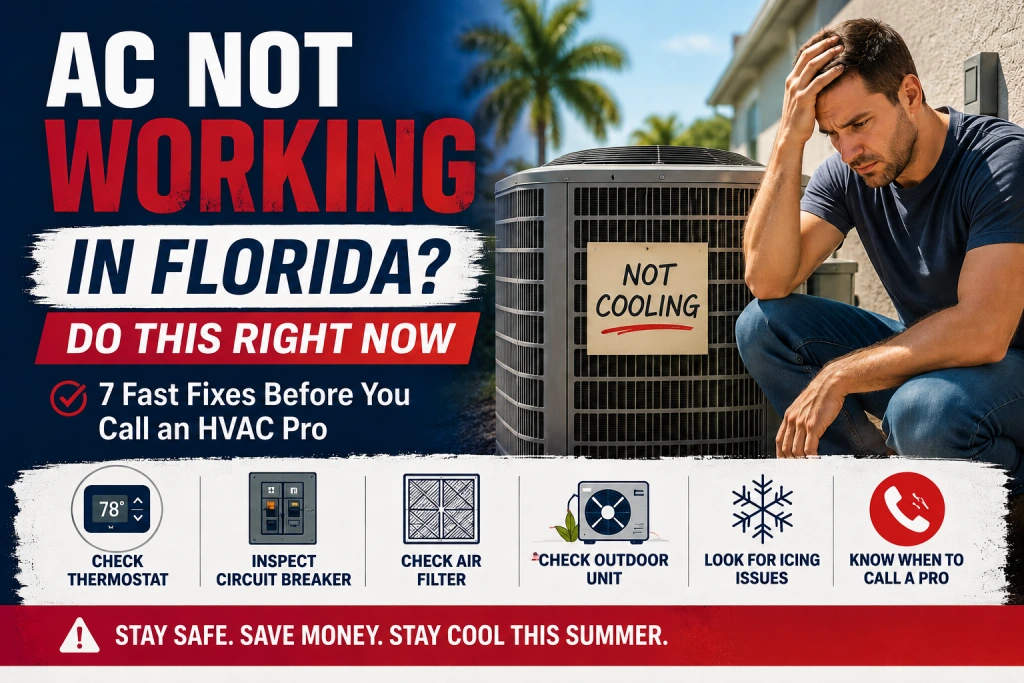
Before you assume the worst, run through the obvious stuff. A surprising number of “AC not working” emergency calls turn out to be a tripped breaker, a dead thermostat battery, or a full condensate pan that shut the system down on purpose to protect your ceiling.
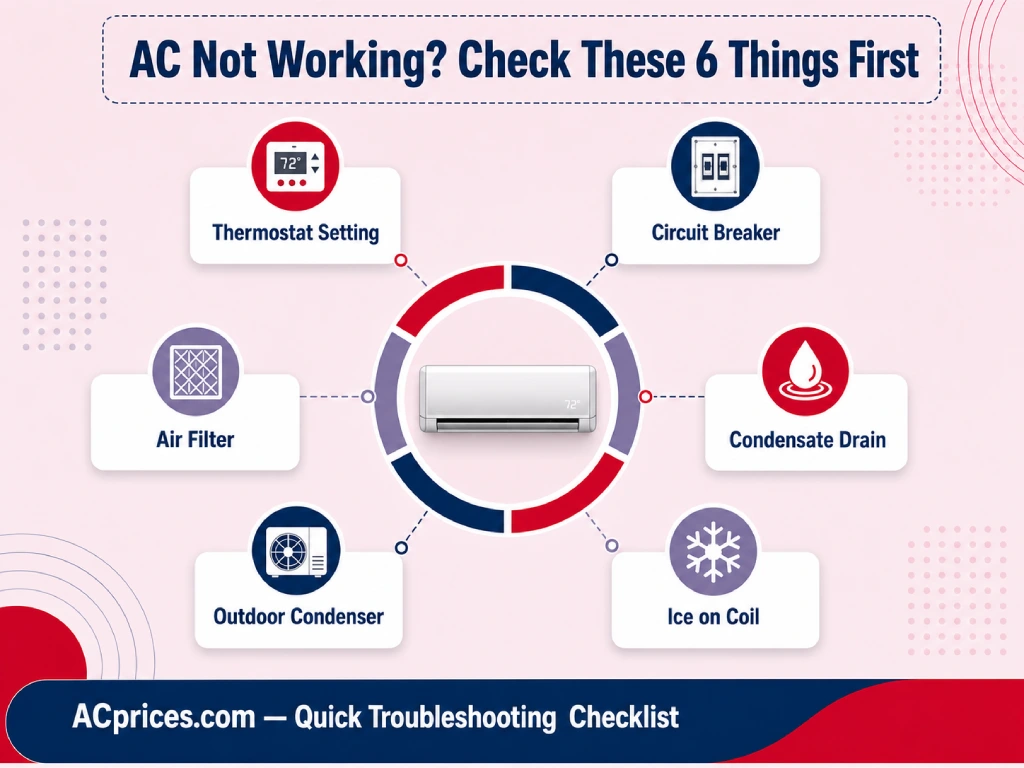
Start here, in this order:
Check the thermostat display. If it’s blank, the batteries may simply be dead.
Confirm the thermostat is set to Cool, not Fan or Off, and the set temperature is below the room temperature.
Check your electrical panel for a tripped breaker on the AC circuit.
Look for a shut-off switch near the indoor air handler that may have been bumped or intentionally flipped by a float switch.
If any of these were the issue, your system may already be running again. If not, move on to the full checklist below before you decide whether this is a DIY fix or a same-day service call.
🔧 Not Sure What’s Wrong
Walk Through a Guided AC Troubleshooting Wizard
Answer a few quick questions about what your system is doing and get a likely cause in under two minutes, before you decide whether to call anyone.
Step 1 of 50%
🔍
AC Troubleshooting Wizard
Which AC issue are you having? Answer a few quick questions to help identify the most likely cause of your air conditioner problem and what to do next.
When you check your thermostat, what do you notice?
What sound do you hear from your AC unit?
How is the airflow from your vents?
When did you last have professional maintenance?
Would you like to receive a free no-obligation estimate from our local contractor partners as well?
Great! Almost done, your result is on the next page.
Please enter your contact details so our Certified contractors can provide estimates as well.
This field is required.
Please enter a valid email address.
Please enter your phone number.
Please enter your city or ZIP code.
By submitting this form, you are giving your consent to receive phone calls and text messages from our contractor partners.
You're almost done!
Please provide your details to see your results.
Name is required.
Email is required.
Please enter your city or ZIP code.
🔍 Diagnosis Ready
AC Troubleshooting Results
Most Likely Cause
—
Get a Certified Tech to Confirm
Our diagnosis is a starting point. A certified HVAC technician can confirm the issue and fix it right the first time.
Once the obvious causes are ruled out, work through this checklist. It's built in the same order a technician would ask about over the phone, so it also makes your eventual service call faster and cheaper if you do need one.
What You Notice
Likely Cause
DIY or Call a Pro
Fan runs, no cold air
Low refrigerant, dirty coil, or failing compressor
Call a pro
Nothing runs at all
Tripped breaker, blown fuse, or thermostat issue
Try DIY first
Water pooling near the air handler
Clogged condensate drain line
Try DIY first
Ice on the indoor coil or refrigerant lines
Airflow restriction or low refrigerant
Call a pro
Loud grinding, screeching, or banging
Motor bearing or fan blade failure
Call a pro
Warm air blowing from vents
Outdoor condenser not running
Try DIY first
If you'd rather not cross-reference symptoms manually, plug what you're seeing into the AC Troubleshooting Wizard above and it will narrow this table down to your most likely cause automatically.
Safe DIY Fixes You Can Try Right Now
These are the fixes a licensed technician would be comfortable walking a homeowner through over the phone. None of them require opening the refrigerant system or removing electrical panels.
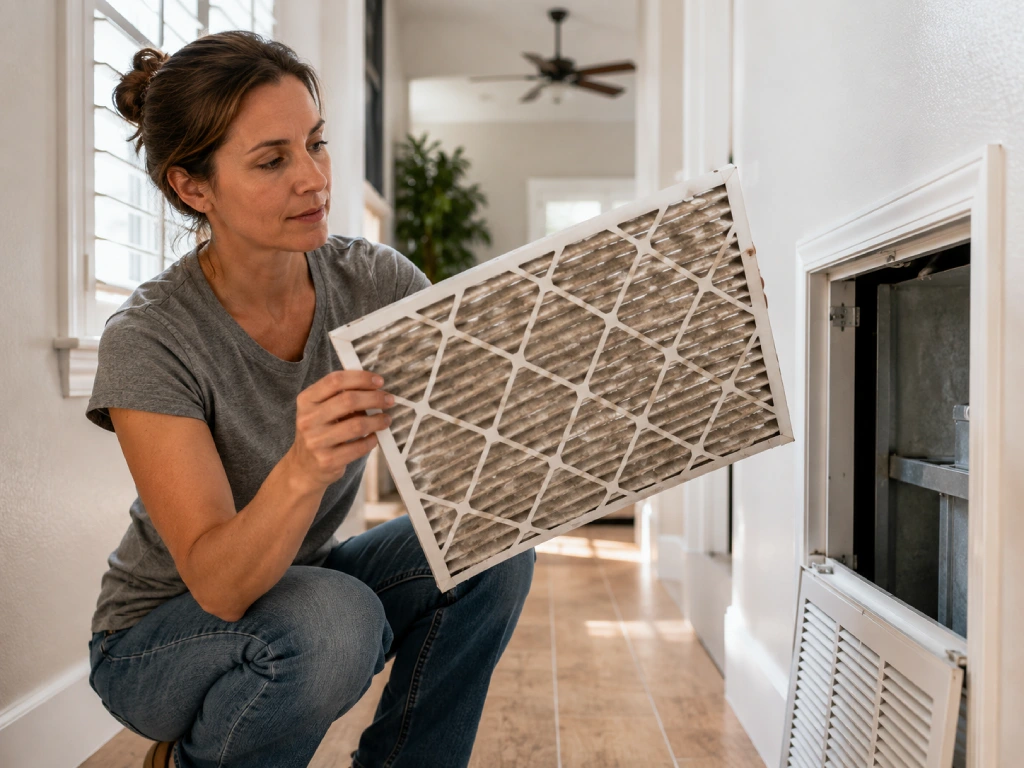
Replace or clean the air filter. A clogged filter is one of the most common reasons airflow drops or a system shuts down on a safety switch. Check it first if you haven't changed it in over a month.
Clear the condensate drain line. If you see standing water near the indoor unit, a wet-dry vacuum on the outside drain termination can pull the clog and let the float switch reset itself.
Reset the system. Flip the breaker off, wait sixty seconds, and turn it back on. This clears minor electrical glitches the way restarting a computer does.
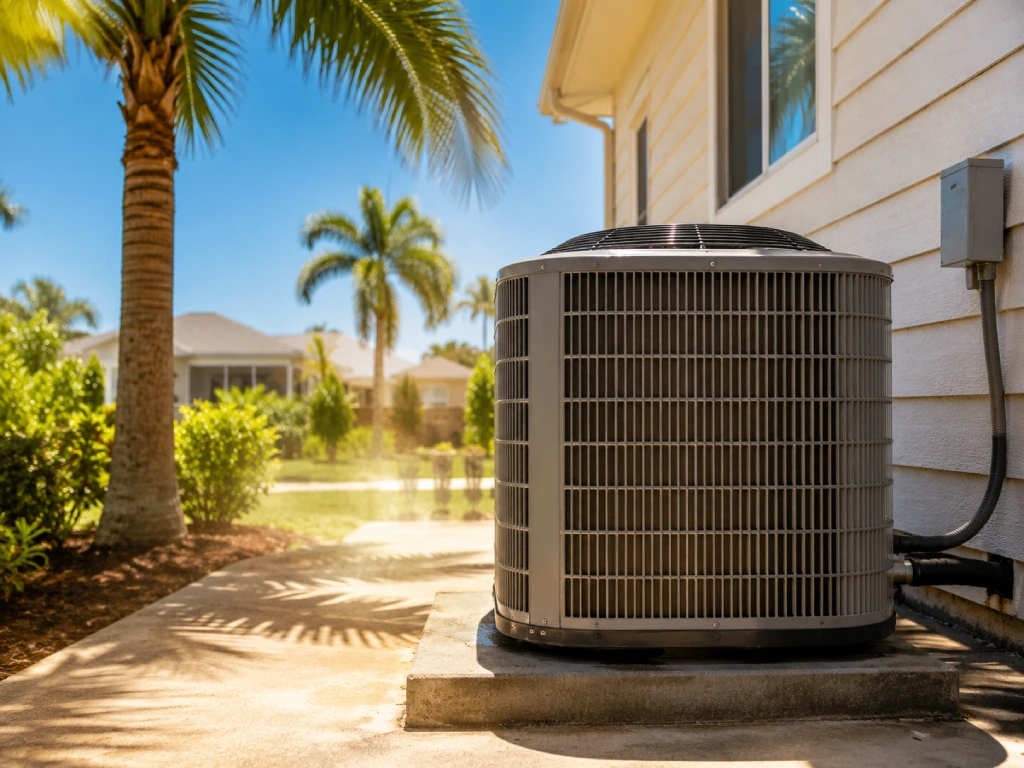
Clear debris around the outdoor condenser. Leaves, grass clippings, and mulch buildup restrict airflow and can trip the unit on high pressure. Keep at least two feet of clearance on all sides.
Check for ice on the coil or lines. If you find ice, turn the system to Fan Only and let it thaw completely, which can take several hours, before running Cool again.
💡 Pro Insight: If the system trips the same breaker twice after a reset, stop. A repeat trip almost always points to an electrical fault, and continuing to reset it risks damaging the compressor or starting an electrical fire.
Red Flags: Stop and Call a Pro Immediately
Some symptoms mean you should stop troubleshooting and get a licensed technician out the same day, both for your safety and to avoid turning a moderate repair into a full system replacement.
⚠️ Call a licensed pro right away if you notice: a burning smell from the vents or air handler, a breaker that trips again immediately after resetting, hissing or bubbling sounds from the refrigerant lines, visible sparking, or standing water near an indoor unit installed in an attic above living space.
A hissing sound near the copper lines is one of the clearest signs of a refrigerant leak. Refrigerant handling is federally regulated under the EPA's Section 608 program, and only a certified technician can legally recover, recharge, or repair a sealed refrigerant system, so this is never a homeowner fix regardless of how simple it looks.
Why AC Units Fail More Often in Florida Summers
Florida's combination of extreme heat, high humidity, and near-constant runtime puts more stress on a residential AC system than almost anywhere else in the country. Systems here often run close to twenty hours a day during peak summer, which is roughly double the workload a system sees in a milder climate.
That extra runtime accelerates the same handful of failure points: capacitors wear out from constant cycling, condenser coils get coated in humidity-driven grime, and condensate lines clog faster because the system is pulling far more moisture out of the air. Breakdowns cluster hardest in July and August, exactly when a home needs cooling the most.
During a heat advisory, indoor temperature safety matters as much as the repair itself. Check current conditions through the National Weather Service if your area is under an active heat warning while you wait on a technician.
🚨 Need Help Today
Connect With a Same-Day Florida HVAC Tech
Our network of licensed, insured Florida contractors handles emergency calls every summer. Tell us what's happening and we'll match you with someone fast.
🔒 Free · No obligation · Licensed Florida contractors only
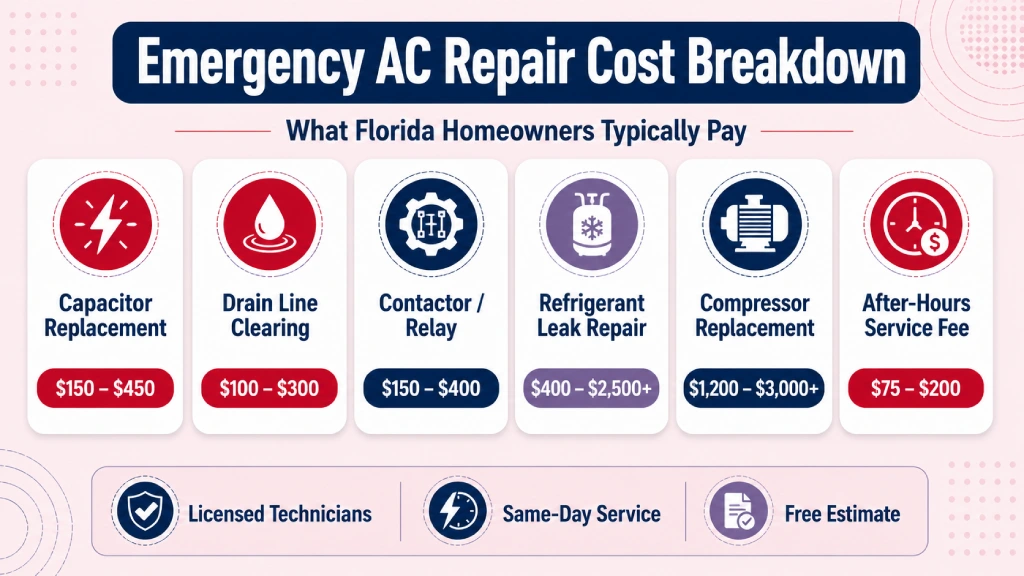
What Emergency AC Repair Typically Costs
Knowing a rough number before the technician arrives helps you tell a fair quote from an inflated one. Costs vary by the part involved and whether the visit happens same-day or after hours.
Issue
Typical Repair Cost
Capacitor replacement
$150 – $450
Condensate drain line clearing
$100 – $300
Contactor or relay replacement
$150 – $400
Refrigerant leak repair and recharge
$400 – $2,500+
Compressor replacement
$1,200 – $3,000+
After-hours or weekend service fee
$75 – $200 on top of the repair
These ranges reflect typical Florida market pricing and can shift based on your system's age, brand, and how accessible the equipment is. Run your specific situation through the AC Repair Cost Calculator to get a tighter estimate before the technician quotes you in person.
💵 Free Repair Cost Estimate
Estimate Your Repair Before the Tech Arrives
Enter what's wrong with your system to see a realistic repair cost range for your situation, so you know if a quote is fair before you agree to it.
Step 1 of 160%
🔧
A/C Repair Cost Calculator
How much will repairing your existing A/C cost? Answer a few questions about what you're experiencing and get a repair cost estimate.
How well has your A/C been cooling your home lately?
Have you noticed large indoor temperature fluctuations?
Is the thermostat on and appears to be functioning properly?
Have you noticed reduced airflow from vents even though the A/C is on?
Have you noticed air coming from vents feels warm?
Is the fan spinning very slowly or not at all on outdoor unit?
Does the air conditioner fan appear to never shut off (outdoor unit)?
Have you noticed strange odours coming from vents or near your furnace?
Have you noticed any unusual noises?
What best describes the unusual noise(s)?
Does your A/C turn on but shuts off soon after?
Does the breaker regularly trip or fuses repeatedly blow?
Have you noticed water damage or water leaking or pooling near your furnace?
Have you noticed ice build up on the refrigerant lines, copper tubing, or coil?
Have your electrical bills been significantly higher than usual lately?
Would you like to receive a free no-obligation estimate from our local contractor partners as well?
Great! Almost done, your result is on the next page.
Please enter your contact details so our Certified contractors can provide estimates as well.
This field is required.
Please enter a valid email address.
Please enter your phone number.
Please enter your city or ZIP code.
By submitting this form, you are giving your consent to receive phone calls and text messages from our contractor partners.
You're almost done!
Please provide your details to see your results.
Name is required.
Email is required.
Please enter your city or ZIP code.
🔧 Diagnosis Complete
Your A/C Repair Estimate
Estimated Repair Range
—
Likely Issue
—
Get an Accurate Repair Quote
A certified HVAC technician can diagnose the exact issue and provide a firm quote. Many offer free diagnostics.
If your AC not working situation means going a few hours or even a full day without cooling, a few simple steps make a real difference indoors.
Close blinds and curtains on sun-facing windows to cut down on solar heat gain.
Run box fans or ceiling fans to keep air moving, especially at night.
Move to the lowest floor of the home, since heat rises and upper floors run noticeably hotter.
Keep kids, elderly family members, and pets in the coolest room, and check on them regularly if temperatures climb into the 90s.
If indoor temperatures become dangerous and repair will take longer than a day, consider a hotel room or a family member's home rather than riding it out.
How to Avoid a Repeat Breakdown Next Summer
Most emergency AC calls trace back to a maintenance item that got skipped, not a system that simply wore out overnight. A yearly tune-up before peak season catches the capacitors, coils, and drain lines that fail under Florida's heavy summer runtime.
The U.S. Department of Energy recommends an annual professional inspection alongside routine filter changes, since a poorly maintained system loses efficiency well before it fails outright. Pairing that with a monthly filter check is the single highest-value habit for avoiding a repeat mid-summer breakdown.
If this breakdown is the second or third one in as many years, it may also be worth comparing repair cost against replacement. Our AC brands and reliability guide and the AC Savings Calculator can help you see whether a new, more efficient system pays for itself faster than continuing to patch an aging one.
Bottom Line
When your AC is not working in the middle of a Florida summer, the fastest path back to cool air is checking the simple things first: power, thermostat settings, filter, and the condensate line. If those don't solve it, or you notice any of the red flag symptoms above, stop troubleshooting and call a licensed technician the same day.
Run your symptoms through the tools above to narrow down the cause and get a realistic repair cost range, then let a licensed Florida contractor confirm the diagnosis in person.
🇺🇸 Same-Day Emergency Service
Get Connected With a Licensed Tech Today
Tell us what's happening with your system and we'll match you with a background-checked Florida HVAC contractor who can get to you fast.
🔒 Free · No pressure · Florida-licensed contractors only
Frequently Asked Questions
Why is my AC not working but the fan still runs?
This usually points to the outdoor condenser not running, often from a bad capacitor, a tripped breaker on the outdoor unit, or low refrigerant. The indoor blower can keep pushing air even when the outdoor unit has stopped, so you get airflow without any actual cooling.
Is it safe to reset my AC breaker myself?
Yes, resetting a breaker once is safe and a normal first troubleshooting step. If it trips again immediately after resetting, stop and call a licensed technician, since a repeat trip usually signals an electrical fault that shouldn't be reset repeatedly.
How long can a house safely go without AC in Florida?
There's no fixed safe number, since it depends on outdoor temperature, humidity, and who is in the home. Elderly residents, young children, and pets are at higher risk and should move to a cooler location well before indoor temperatures become uncomfortable.
Should I keep running my AC if I see ice on the coil?
No. Switch the system to Fan Only and let the ice fully melt, which can take several hours, before running Cool again. Continuing to run a frozen coil can damage the compressor and turn a moderate repair into a much more expensive one.
Does homeowners insurance ever cover emergency AC repair?
Standard homeowners insurance typically does not cover normal AC breakdowns from age or wear. Coverage sometimes applies if the failure resulted from a covered event like a lightning strike or storm damage, so it's worth checking your specific policy before assuming it's excluded.